Wine Tourism
“Where every bottle tells a story”
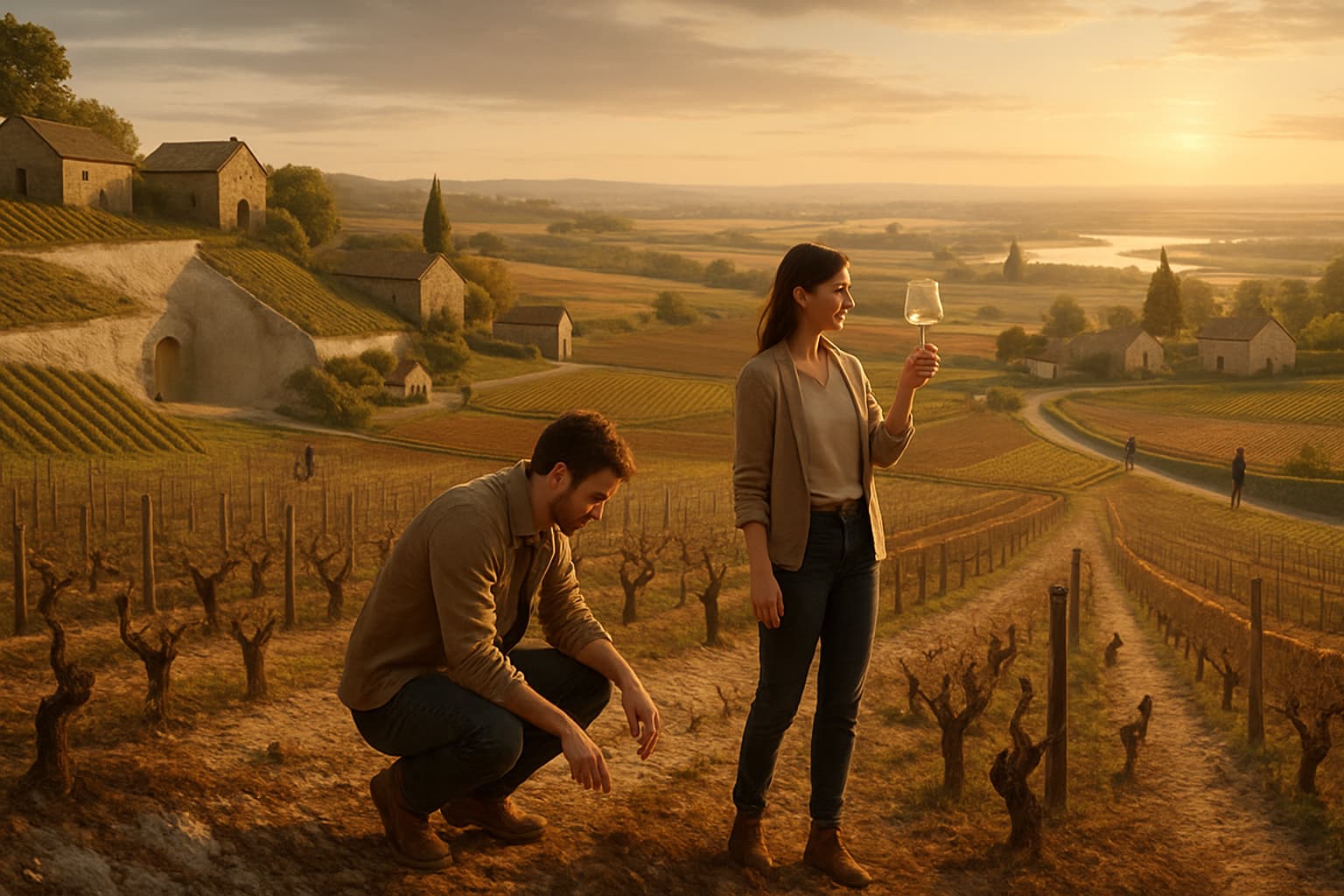
The train slid east through the gray light, past fields of vines cut low to the earth. The posts stood in lines like old soldiers. The wires were bare. In winter the vines look dead. They are not dead. They are waiting. That is how France feels when you come to it for wine: old, quiet, waiting for you to learn how to drink it.
You do not come only to taste. You come to see the land that makes the wine. You come to feel the cold chalk under your boots and the hot stones under your hand. You come to smell the cellars and the barrel rooms and the dust on the old bottles that no one will ever drink. You come to find out if all the talk is true.
It is true enough.
Wine tourism in this country is not a thing apart. It is the country itself. It is the hills and rivers and small towns and long lunches. It is the men and women who work the vines in all weather. It is the way the light falls at the end of the day over a row of grapes, and the way the first glass tastes when you have walked the fields and are tired and ready for it.
You can chase it from north to south and from west to east. You can try to drink it all. You will fail. But in the trying you will come to know something about France and something about yourself.
France is not drawn only with borders and roads. It is drawn with wine regions. Each has its own soil and sky and way of doing things. The French have a word for this: terroir. It is a simple word that means everything that makes a place what it is: the dirt, the air, the slope, the way the sun comes up and goes down, the hands that work it.
When you travel for wine here, you follow the terroir.
You do not need to remember all the names. They will come back to you in the glass. But it helps to know the great roads of wine that run through the country.
The train from Paris runs east through flat fields and quiet towns. Then the chalk hills rise. This is Champagne. It is cold here. The vines cling to white slopes that shine when the sun is out. The chalk holds the water and throws back the light. The grapes struggle. That struggle is in the wine.
You walk down into cellars cut deep into the chalk. The air is cold and wet. The bottles lie stacked in long rows, necks tilted, caps crusted with yeast. They have been there for years. In the half-dark you hear the guide’s voice and your own boots on the floor. You run a hand along the wall and it comes back white.
You taste in stone rooms under old houses in Reims and Épernay. The wine is pale and fine and tight in the mouth. Good Champagne does not shout. It climbs. It starts with a line of acid and then opens into bread and apple and chalk. You watch it in the glass. The bubbles move in a straight, thin stream. They do not quit.
Champagne tourism is polished. There are big houses with famous names. They will show you their history and their caves and pour you their best if you pay. But there are also small growers in the villages. You sit at a kitchen table and taste the wine the family makes from their own vines. It is rougher, sometimes better, always truer to the land.
You come out of the cellar into the weak northern sun and the world feels new. That is how bubbles work.
Farther south, the land tightens into narrow valleys and low hills. Stone walls run along the road. The villages are small and clean. This is Burgundy. People speak of it in low voices. They say the word as if it were a prayer.
Here the vineyards are broken into small plots. Each has a name. The names are on stone markers at the edge of the road: Clos de Vougeot, La Tâche, Les Amoureuses. Men have fought in courts and in families over these plots. They have written laws for them. They have gone broke for them. They have grown old in them.
You walk the rows in the morning when the mist is low. The soil changes under your shoes from brown to red to white. A man from the domaine points to a line of vines and says, “Here the wine is light and fine.” He points a few meters away. “There it is deeper and heavier.” You taste later and you see he is right.
In cellars that smell of damp stone and old wood, you drink Pinot Noir that is pale in the glass and deep in the mouth. You drink Chardonnay that has seen oak but does not taste of it alone. The wines are not simple. They move and change in the glass. You have to sit with them. They do not care if you understand them.
Wine tourism here is not loud. There are no big tasting bars with music. There are narrow streets in Beaune and Nuits-Saint-Georges. There are long lunches where the bread is good and the butter is better and the wine is the center of the table. You learn to listen when the vigneron speaks. He will not say much. But what he says will matter.
Burgundy is not just a place to taste. It is a place to learn patience and humility. You cannot rush a wine that takes ten years to show itself.
West, where the Garonne and Dordogne rivers meet and run to the sea, lies Bordeaux. It is a port city and a wine city and has been both for a long time. The English drank Bordeaux when they called it claret and fought over the land that grew it. The trade made men rich. The châteaux grew large and proud.
The vineyards stretch on and on over gravel and clay and sand. The river bends and the soil changes, and the wines change with it. On the Left Bank the gravel drains quickly. The Cabernet Sauvignon grows strong there. The wines are dark and firm and smell of cassis and cedar and sometimes of the pencil shavings from the school desk of your childhood. On the Right Bank there is more clay. Merlot does well. The wines are rounder, softer in youth, but can age like old leather.
Wine tourism in Bordeaux has two faces. One is polished stone and long drives lined with plane trees. You see this in the Médoc and in the grand estates whose names you know from fancy lists. You walk past stainless steel tanks that shine and into tasting rooms with high ceilings. The other face is in smaller family properties, especially in places like Fronsac and the Côtes. There you meet the owner in his boots. He may have just come in from the vines.
You taste young wines from the barrel. They are hard and closed. You taste older bottles and see what time does. The tannins soften. The fruit grows quiet. The cedar and earth come up. You learn that Bordeaux is not made for haste. It is made for keeping.
The city itself is worth your time. You drink a glass in a bar along the Garonne and watch the water move slow to the sea. The old stone facades catch the late light. You feel the weight of centuries of trade and talk and wine.
The Loire is a long, lazy river that runs through the center of the country. It passes castles and towns and wide fields. Vines follow it like a shadow. Wine here is not one thing. It is many things.
Up near Sancerre the hills are chalk and flint. The Sauvignon Blanc is sharp and clean. It tastes of citrus and wet stone and sometimes of smoke. You stand in a vineyard and pick up a piece of silex and strike it. The spark you see is in the wine.
Farther west, in Vouvray and Montlouis, Chenin Blanc grows on tuffeau, a soft limestone. It can be dry, off-dry, or sweet. It can be young and bright or old and honeyed, with the smell of wool and lanolin and bruised apple. You learn that one grape can wear many faces.
In Chinon and Bourgueil, on the river’s left and right, Cabernet Franc is king. The wines are red and smell of red fruit and herbs and sometimes of green pepper and tobacco. They are good with the goat cheeses of the region and with simple meats.
Wine tourism here is gentle. You ride a bicycle along the river. You stop at a small cave dug into the soft rock and taste wines at a rough wooden table. You visit a château and stand on its ramparts and look out over the river and the vines and know that men have stood there before you, with a cup of wine in their hand, and watched the same water.
The Rhône is a working river. It runs from the Alps to the sea. Along its banks the vines hold fast to steep slopes and broad plains.
In the north the valley is narrow. The vineyards cling to terraces cut into hard granite. The names are short and strong: Côte-Rôtie, Hermitage, Cornas. The wind blows hard—the mistral—and it strips the sky clean. The Syrah here is dark and peppery and tastes of black olive and smoke and meat. You stand on a high terrace and look down at the river and feel the wind push at your back. You think of the men who built the stone walls and carried the soil up in baskets.
In the south the land opens. The sun is stronger. There are olives and lavender and dry herbs. The mistral still blows, but the heat sits heavy. Here the wines are blends: Grenache, Syrah, Mourvèdre, and others. In Châteauneuf-du-Pape the vines grow in fields of round stones. You pick one up. It is warm in your hand. It holds the sun from the day and gives it back to the vine at night. The wines are rich and thick and smell of black fruit and garrigue, the wild herbs of the hills.
Wine tourism in the Rhône is physical. You climb slopes. You feel the wind. You taste in cellars that smell of stone and in courtyards that smell of dust and thyme. You eat lamb grilled over vine cuttings and drink red wine that stains the glass.
Farther south, near the sea, the light changes. It is harder, whiter. The sky is big and the air smells of salt and pine. This is Provence and the wider south. People come here for beaches and old ports and easy days. They should also come for wine.
The rows of vines roll over low hills. Between them are olive trees and fig trees and dry grass. The wines are mostly pale rosés, the color of onion skin or wild salmon. They are not serious in the way of grand reds, but they are honest. They taste of red berries and citrus and salt. They taste of hot days and long lunches.
There are also reds, dark and spicy, and whites that taste of stone and herbs. In Bandol, by the sea, Mourvèdre makes wines that are deep and can age for years. You drink them in a small port town and watch the boats rock in the harbor.
Wine tourism here is slow. You stay in a village. In the morning you walk the market and buy bread and cheese and fruit. In the afternoon you visit an estate, taste under the shade of plane trees, and then drive to the sea. The air cools when the sun drops. You pour another glass.
The danger in wine tourism is that you chase too much and see too little. In France there is always another region, another famous name, another bottle you are told you must taste. You cannot do it all. You should not try.
Pick a few regions—two or three. Stay long enough to learn the roads and the faces at the café. Walk the vines in the morning. Visit one or two domaines a day, no more. Take time for lunch. The French understand that wine belongs at the table. You should understand it too.
Learn a few words: Bonjour. Merci. S’il vous plaît. Parlez-vous anglais ? They are not much, but they open doors. Remember that for the people you meet, this is not a show. It is their work and their land and their family. Treat it with respect.
Do not be afraid of small places. The big names will always be there. The smaller estates will give you time and stories. They will pour you wines they are proud of, even if the world does not know them yet.
Spit when you must. You are not here to get drunk. You are here to taste and to remember.
When you leave France, you can pack bottles in your suitcase. You will. But they are not the real weight you carry.
You will remember the cold of the Champagne cellars and the chalk on your fingers. You will remember the fog lifting over a Burgundy vineyard and the way the soil changed under your boots. You will remember the long straight roads through the Médoc and the first smell of a barrel room in Saint-Émilion. You will remember the wind on the Rhône and the heat on the stones of Châteauneuf. You will remember the sound of the Loire at dusk and the color of the sea in Provence when the sun goes down and your glass is half full.
Wine tourism in France is not about ticking off labels. It is about learning to see how place becomes liquid and how time becomes taste. It is about the patience of vines and the stubbornness of people who work them year after year, frost after frost, hailstorm after hailstorm, harvest after harvest.
You come for the wine. You stay for the land and the faces and the light. You leave knowing that you have only scratched the surface. That is all right. The country will be here when you come back. The vines will still be standing in their rows. The barrels will still be sleeping in the dark. The wine will still be waiting.
Tannins are astringent compounds found in wine that contribute to its texture and aging potential, often causing a drying or puckering sensation in the mouth. They are derived from grape skins, seeds, and stems, as well as from oak barrels used during aging.
/ˈtænɪnz/
Malic acid is a naturally occurring organic acid found in grapes that contributes to the tart, green apple-like flavor and crispness in wine. It plays a significant role in the taste and acidity of wine.
/mælɪk ˈæsɪd/
Filtration in winemaking is the process of removing solid particles from wine to clarify and stabilize it before bottling, using various types of filters to achieve different levels of clarity and remove unwanted elements like yeast, bacteria, and sediment.
/fɪlˈtreɪʃən/
Oxidation in wine is a chemical reaction between the wine and oxygen that can change its flavor, aroma, and color. This process can be beneficial or detrimental depending on the extent and context of the exposure.
/ˌɒksɪˈdeɪʃən/
Microclimate refers to the unique climate conditions of a small, specific area within a larger region, significantly influencing grapevine growth and the characteristics of the resulting wine.
/ˈmīkrōˌklīmit/
Get weekly wine recommendations, vineyard news, and exclusive content delivered to your inbox.