Wine Tourism
“Where every bottle tells a story”
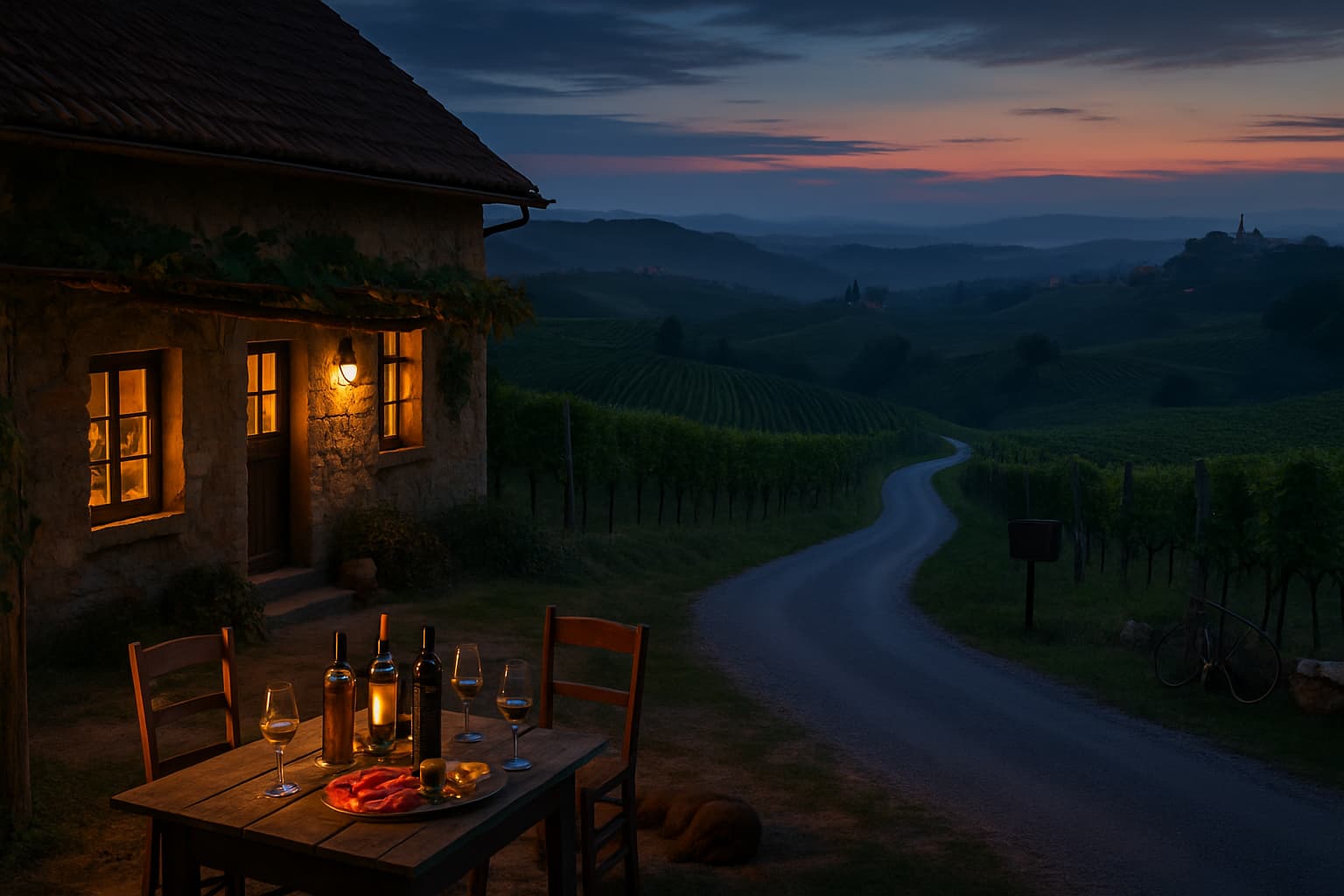
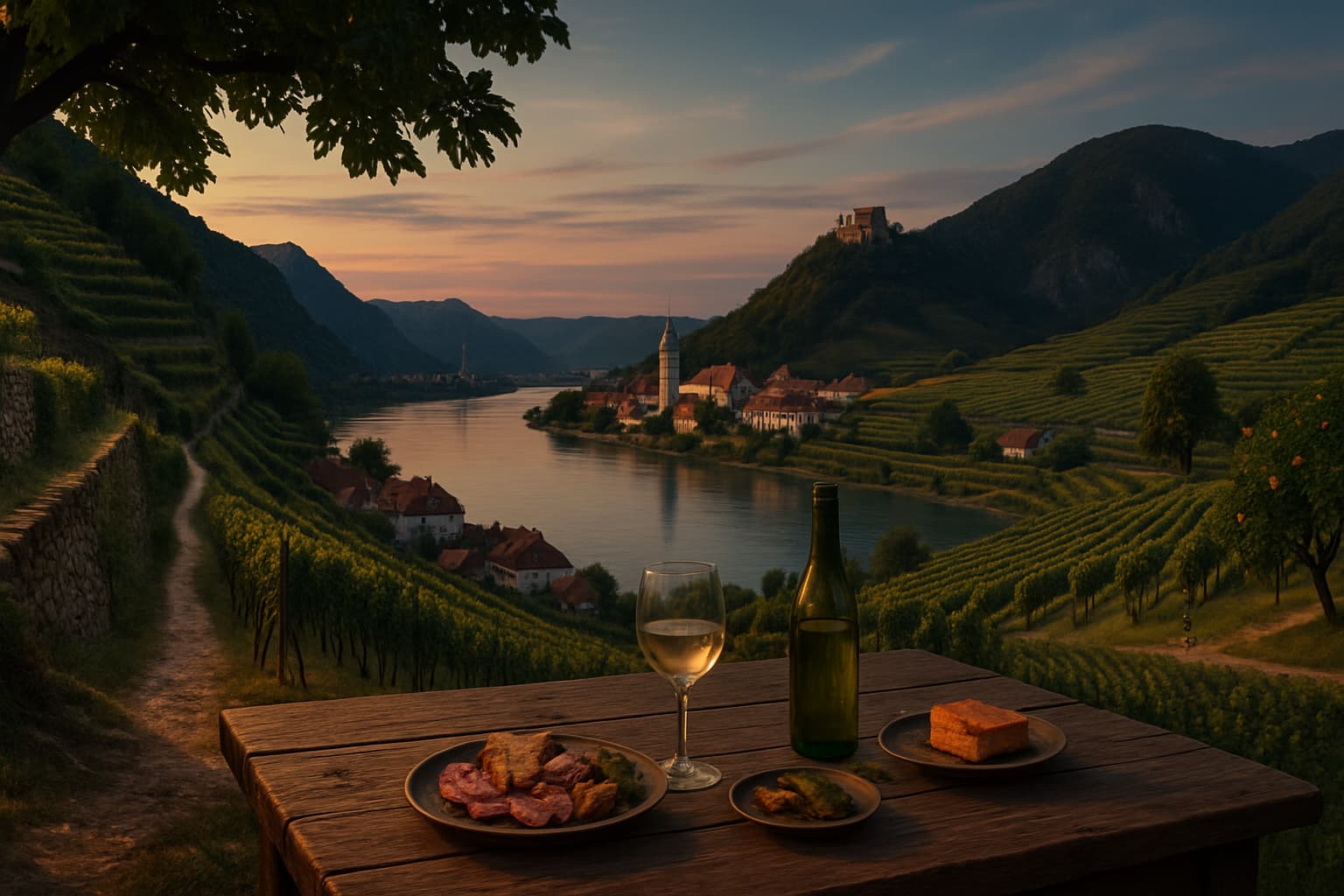
The road ran through the hills like a thin gray vein. On both sides, vines climbed the slopes in neat green ranks, each plant staked against wind and time. The sun was hard and clear. The air smelled of earth, stone, and something sweet that you could not yet name. This was the first thing you learned in Slovenia: the country was small, but the wines were not.
You came for wine and found a landscape made for it. Mountains to the north. The sea to the southwest. Rivers cutting through valleys. Old farmhouses with red roofs. Villages built around churches and inns. It was a country that had learned to live with borders shifting around it, but the vines stayed in the same soil. That was what mattered.
You drove on, and the vineyards followed you. They climbed the hills in Brda, spread wide in Vipava, folded into the rolling country of Štajerska and Prekmurje. You saw that wine here was not a show. It was survival and patience and weather. That is what you had come to taste.
Slovenia is not large. You can cross it by car in half a day. But the land breaks and folds and changes under your wheels. In a few hours you pass from Alpine chill to Mediterranean heat, from damp river bottoms to dry karst stone. The vines know these changes. They show it in the glass.
The country has three main wine regions. Each is different. Each feels like its own small world.
The wine people here do not talk much. They work. They taste. They watch the sky. When they speak, it is about the year, the rain, the frost, the heat. They know that wine is not made in the cellar. It is made in the vineyard and in the waiting.
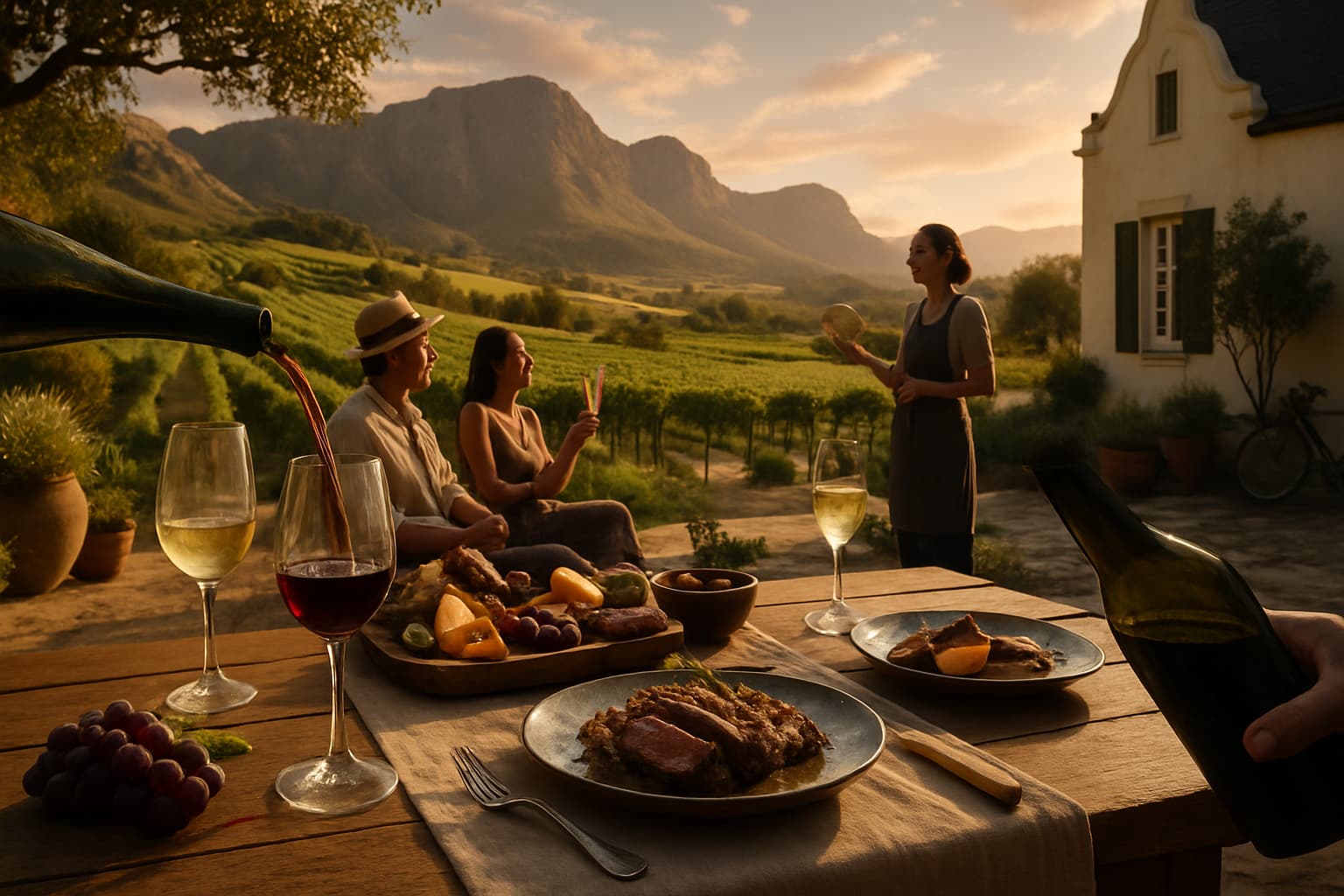
Wine tourism in Slovenia is not a parade of buses and big signs. It is slower than that. You drive, or you walk, or you ride a bicycle. You follow narrow roads that twist between vines. You stop when you see a small board that says “Vinska klet” or “Degustacija.” You knock. Someone opens the door. You sit at a wooden table and they pour.
In the far west, the land rolls like a sea of green. This is Goriška Brda, called simply Brda by the people who live there. The hills rise and fall in long waves. Vines cover them in rows that catch the morning and the evening light. The soil is made of old marl and sandstone, layered and brittle underfoot. It breaks easily. The roots go deep.
You stand on a hilltop and look toward Italy. It is right there. No fence. No wall. Just more vines.
Here you drink rebula, a white grape that has grown in these hills for centuries. It can be light and sharp, or deep and golden, aged on skins until it takes on tannin and grip. You drink sauvignonasse, once called tokaj, with its quiet, steady character. You drink merlot and cabernet franc that taste of dark fruit and warm stone.
The winemakers in Brda work on small farms. Many of them lived through a time when quantity meant more than quality. They changed that with stubbornness. They cut yields. They stopped selling bulk to cooperatives. They bottled their own names. They worked their slopes by hand because machines could not climb them.
You sit with them under a pergola or in a cool stone cellar. They bring bread, cheese, cured meats. The wine is poured in simple glasses. You taste the sun and the slope and the patience. The talk is easy and clear. They tell you which hill the grapes came from. They tell you how the wind blows in autumn. They tell you where the fog sits in the valley and where it does not.
There are no big tasting rooms with polished counters. There are dogs sleeping in the shade and children running between barrels. You feel that you are not a customer. You are a guest.
Further south, the hills open into a long valley. The Vipava River runs through it. The Bora wind comes down from the mountains and hits the valley hard. It can blow a man off his feet. It can tear at the vines. The people here know the wind. They tie their vines low and strong. They build stone walls to break the gusts.
The valley is warm but not soft. The wines show this. You drink zelen, a local white grape that smells of herbs and citrus and wet stone. You drink pinela, another old variety, with a quiet richness and a slow, spreading taste. You drink malvazija, wide and generous, carrying the weight of the sun.
The winemakers in Vipava have seen war and hunger and change. Old borders ran through these hills. Empires rose and fell. The vines stayed. Many families make wine in old stone houses with thick walls and small windows. The cellars are low and dark. Barrels rest in the cool air. Some producers work in stainless steel and clean lines. Others use clay amphorae buried in the ground, letting time and gravity do the work.
You can walk between villages. The names are short and hard on the tongue. The roads are narrow and quiet. At night, the sky is dark and the stars are sharp. You drink wine under them and listen to the wind in the vines.
Beyond Vipava, the land rises to a stone plateau. This is the Kras, the Karst. The word has traveled the world. It means limestone, caves, sinkholes, and hidden rivers. Here, the soil is thin and red with iron. The air smells of rock and sea.
On this hard land grows refošk, the grape that becomes teran. The wine is dark, nearly black in the glass. It is sharp with acid and iron. It tastes of blood and stone and sour cherries. It is not a soft wine. It is a wine you drink with food—heavy meat, strong cheese, cured ham.
They raise pigs here and hang pršut in cool, airy rooms to dry in the Bora wind. The ham is sliced thin and served with teran. The salt of the meat and the bite of the wine meet each other and make sense.
Tourism in the Karst is simple. You stay in farmhouses called turistične kmetije. You sleep in plain rooms. You eat what the family eats. You drink what they make. In the morning you walk over the stone fields. In the afternoon you visit cellars dug into rock. The barrels sit close together. The air is damp and smells of wood and must.
You learn that not all wine must be easy. Some wines ask you to work for them. Some places too.
In the northeast, the land softens again. The hills are green and rounded. The Drava River moves slowly through fields and orchards. This is Štajerska Slovenija, the Styrian part of the country. The climate is cooler. Autumn comes earlier. The wines are clean, bright, and full of line and length.
The slopes here are steep in places. Vines cling to them in narrow terraces. In the morning, mist lies in the valleys. By midday, the sun burns it off and the hills stand clear.
You drink laški rizling (Welschriesling) that is not grand but honest and pure. You drink rizling (Riesling) with sharp bones and long, dry finishes. You drink šipon (Furmint), a grape that can be simple or noble, depending on the hand and the year. In warm years and late harvests, it can grow botrytis and turn to gold in the glass.
The wine roads here are marked. You can follow them by car or bicycle, moving from farm to farm. At each stop, you sit at a wooden table with a view of the vines. They bring cold cuts, pickles, bread, sometimes a hot dish from the kitchen. You taste light, fresh whites that fit the landscape. You do not hurry. There is no need.
In autumn, the leaves turn yellow and red. The harvest comes. The villages smell of crushed grapes and fermenting must. If you come at this time, you drink mošt, the cloudy, half-fermented juice, sweet and prickling on the tongue. You stand in the courtyard and watch the trucks bring in grapes. Men and women move fast. There is work to be done before the cold.
In the southeast, along the Sava River, lies Posavje. It is quieter for visitors. The hills are lower, the forests thicker. The vineyards are often small, scattered among orchards and fields. Many people here make wine for themselves, in tiny cellars called zidanice that sit alone on hills, like stone huts watching the vines.
From these plots comes cviček, a pale red wine made from a blend of red and white grapes. The alcohol is low. The acid is high. It is a peasant wine, built to drink in great quantities with heavy food. It is not a wine that tries to impress. It is a wine that keeps you going through work and winter.
Tourism here is not polished. You rent a zidanica for a few days. You sleep above the cellar. You wake to fog in the valley and roosters calling. You cook your own food or eat in local inns. You walk between vineyards and chapels. You drink cviček from simple glasses and feel the day move slowly.
There are also more ambitious wines now in Posavje—single-variety whites, structured reds—but the heart of the place lies in these small hill cellars and the rough, honest wine they hold.
In the western regions, some winemakers began to question the clean, quick wines of the modern age. They looked back to older ways. They let white grapes ferment on their skins, sometimes for weeks or months. They worked with little or no added yeast, little or no filtration. They aged wines in big old barrels, in clay, in concrete.
The wines came out deep in color—amber, copper, gold. People started calling them orange wines. Some were cloudy. Some were clear. They carried tannins like red wines but smelled of dried fruit, tea, herbs, and nuts, with a line of salt and stone.
In Slovenia, especially in Brda, Vipava, and the Karst, you find many of these wines. They are not made for everyone. They require patience and an open mouth. But they tell you something about the land and the people. They show a stubbornness, a refusal to chase fashion. They show a trust in time.
You sit in a cellar and taste a rebula that spent half a year on skins. It is not soft. It is not loud. It is steady and long. You feel it change in the glass as it warms. The winemaker watches you. He does not ask if you like it. He knows it is not a question with a simple answer.
Wine tourism here is not only about seeing pretty hills. It is about meeting these choices, these risks in the glass.
You do not need much to travel the wine country of Slovenia. A car helps. A map helps. Better still, a slow heart and time.
The wine roads are marked with signs. They wind through Brda, Vipava, Štajerska, and other regions. The roads are narrow. You drive carefully. You stop often.
You can book stays at tourist farms, small guesthouses, or family hotels. Many have their own wine. Others work with neighbors. Breakfast is simple and strong: bread, cheese, cold cuts, eggs, coffee. Sometimes there is homemade jam, honey, or schnapps.
You call ahead to wineries when you can. Many are family places. They are not always open. Harvest time is busy. So is pruning, bottling, racking. But when they can, they will open the door.
Tastings are not rushed. You sit. You talk. You taste several wines, sometimes many. You pay a fee or you buy bottles to take with you. The prices are fair. The value is good.
The best seasons are spring and autumn. In spring, the vines are bright and new. The air is cool. In autumn, the hills burn with color. The fruit is in. The cellars are alive.
You move slowly from place to place. You learn the names of grapes you had never heard before. You begin to say them in the local way. Rebula. Zelen. Pinela. Šipon. Teran. Cviček. They stop being strange. They become part of your own mouth.
Wine alone is not enough. It needs food and talk and silence.
In Brda and Vipava, you eat prosciutto, sausages, polenta, wild herbs, fresh vegetables, and soft cheeses. Near the sea, you eat fish, shellfish, and squid with crisp whites. In the northeast, you eat hearty stews, roast pork, sauerkraut, and pumpkin seed oil on salads. In the Karst, you eat pršut, lamb, and strong cheeses with teran.
The people are reserved at first. They watch you. They see how you behave. If you are loud and careless, they stay distant. If you listen, if you taste, if you show respect for the work and the land, they open. Stories come. Old memories. Bad years and good years. Frost that killed half the crop. Hail that broke the leaves. A perfect autumn when everything ripened just right.
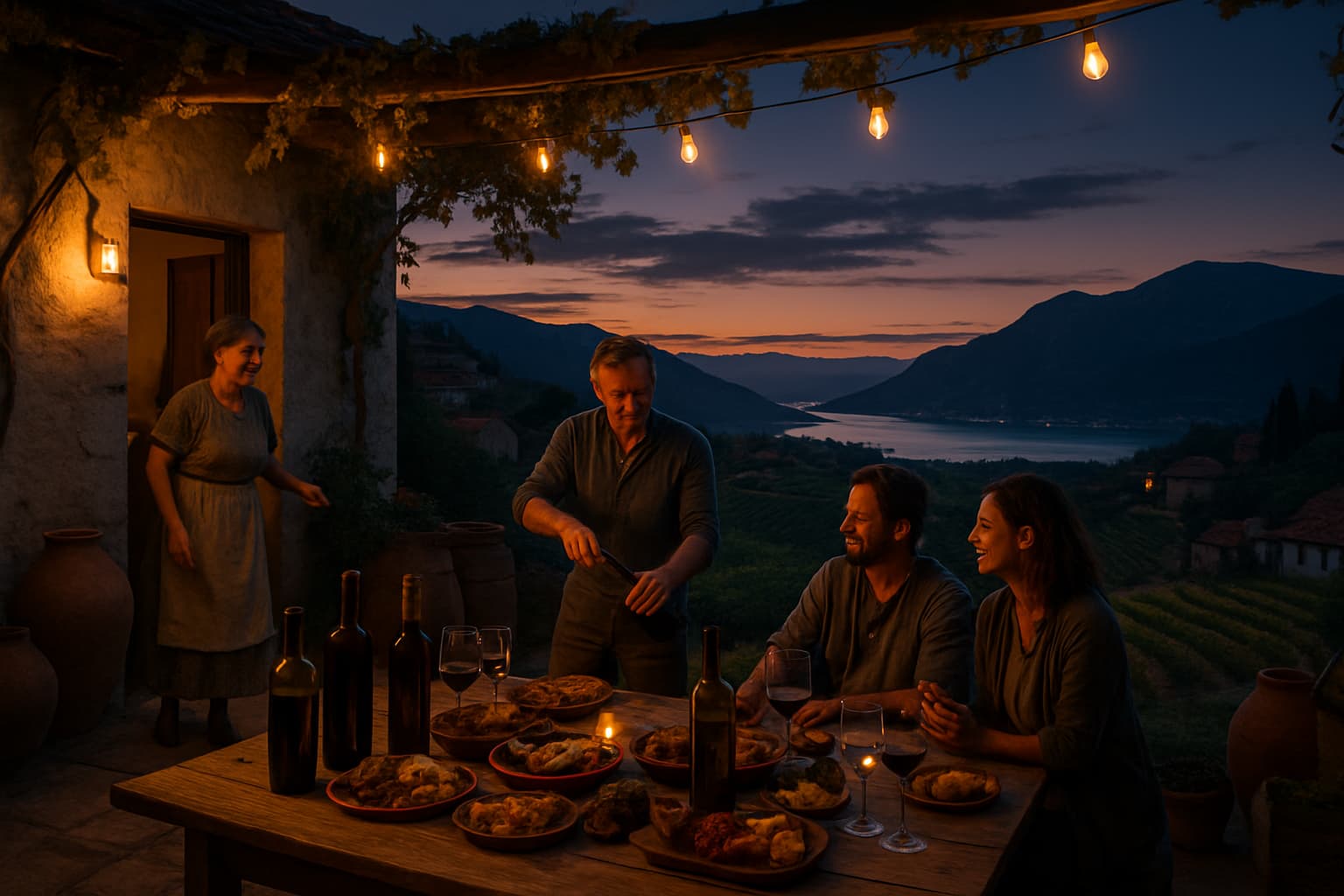
At night, in the hills, it is quiet. You step outside your room and hear almost nothing. Maybe a dog. Maybe an owl. Maybe the wind in the vines. You stand there, holding a last glass, and feel the day settle.
This is also part of wine tourism in Slovenia: the quiet, the space, the sense that you are not in a place built for show, but in a place where people live and work and wait for the next harvest.
When you leave, your car is heavier. Bottles clink in the trunk. Some are wines you understood at once. Others are wines you are still thinking about. You carry labels with names you can now pronounce. You carry the memory of hills, of stone, of winds with hard names.
You remember the first glass you drank on a hill in Brda, the sun low, the vines running away into the distance. You remember the sharp, iron taste of teran with a slice of pršut in the Karst. You remember the clean, cold line of a Styrian riesling on a misty morning. You remember the rough, light cviček in a small hill cellar while rain fell on the roof.
Slovenia is not a place of grand châteaux or polished tasting palaces. It is a place of farms, of families, of small cellars and long patience. The wines are like the country—quiet at first, then deep, then honest.
You came for wine. You leave with something else as well: a sense of land held close, a sense of work done without noise, a sense that good things grow in small places if you give them time.
You drive away. The hills drop behind you. The vines stay, as they always have, waiting for another year, another sun, another stranger to come and taste what this soil can do.
Tannins are astringent compounds found in wine that contribute to its texture and aging potential, often causing a drying or puckering sensation in the mouth. They are derived from grape skins, seeds, and stems, as well as from oak barrels used during aging.
/ˈtænɪnz/
Malic acid is a naturally occurring organic acid found in grapes that contributes to the tart, green apple-like flavor and crispness in wine. It plays a significant role in the taste and acidity of wine.
/mælɪk ˈæsɪd/
Filtration in winemaking is the process of removing solid particles from wine to clarify and stabilize it before bottling, using various types of filters to achieve different levels of clarity and remove unwanted elements like yeast, bacteria, and sediment.
/fɪlˈtreɪʃən/
Oxidation in wine is a chemical reaction between the wine and oxygen that can change its flavor, aroma, and color. This process can be beneficial or detrimental depending on the extent and context of the exposure.
/ˌɒksɪˈdeɪʃən/
Microclimate refers to the unique climate conditions of a small, specific area within a larger region, significantly influencing grapevine growth and the characteristics of the resulting wine.
/ˈmīkrōˌklīmit/
Get weekly wine recommendations, vineyard news, and exclusive content delivered to your inbox.