Wine Tourism
“Where every bottle tells a story”
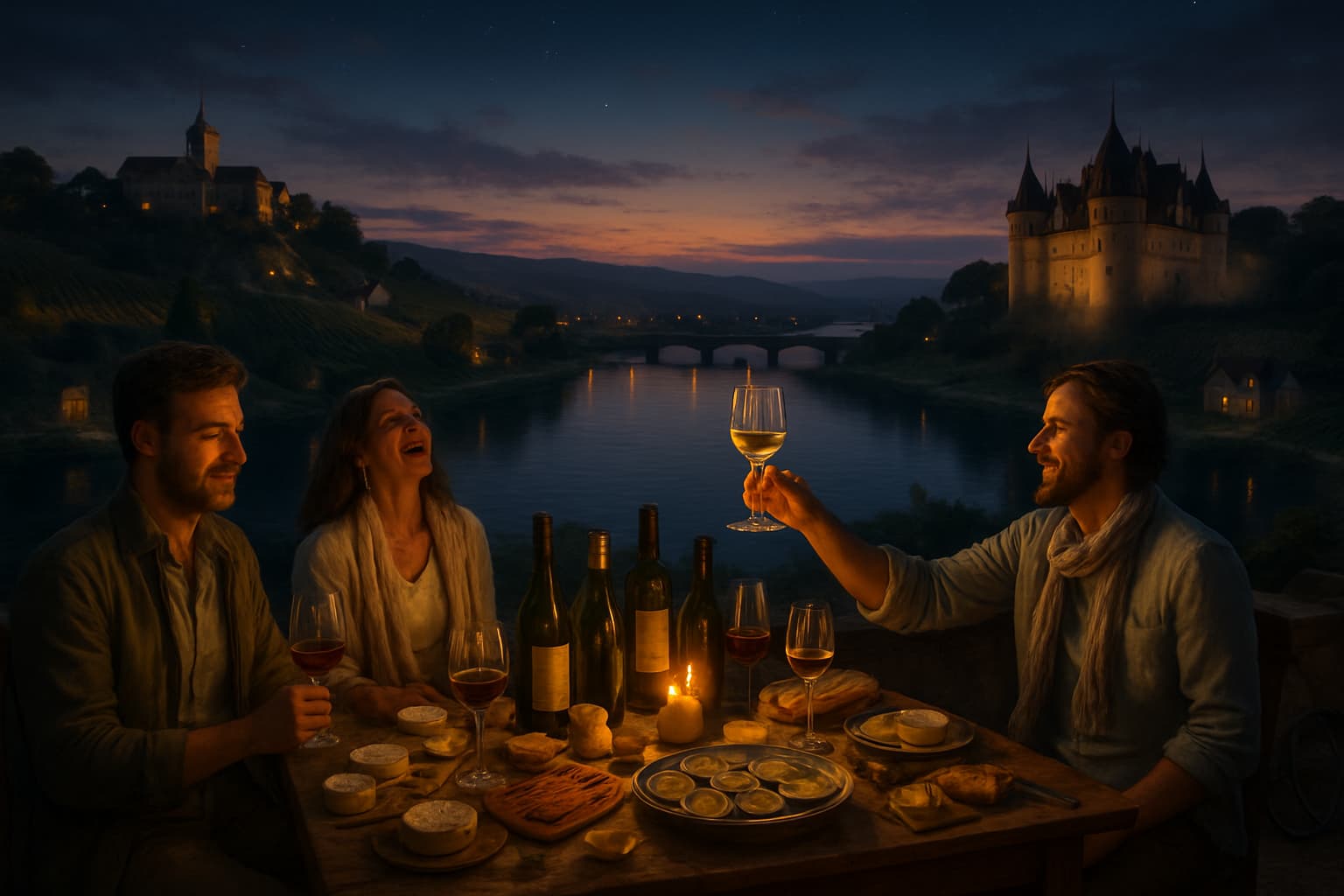
The Loire Valley is not a wine region. It’s a long, liquid hallucination laid across the middle of France like a silk ribbon soaked in Sauvignon Blanc and medieval blood. You don’t visit it; you drift through it, glass in hand, wondering how a place can be this civilized and this deranged at the same time.
You come for “wine tourism,” whatever that means—some brochure-fed fantasy of gentle bike rides, châteaux at sunset, and polite tastings in stone cellars. You leave with purple teeth, a suitcase full of unstable natural wine that may or may not explode in your kitchen, and a burning suspicion that the French have been quietly hoarding the good life and laughing at the rest of us for centuries.
Welcome to the Loire. Buckle up. The ride is long, the river is wide, and the wines are far stranger than the travel guides will ever admit.
The Loire is France’s longest river—a lazy, shimmering serpent that runs more than 1,000 kilometers from the Massif Central to the Atlantic. Along its banks, wine regions stack up like chapters in a very drunk novel: Sancerre and Pouilly-Fumé in the east, then the Touraine, Vouvray, Chinon, Bourgueil, Saumur, and finally Muscadet near the ocean.
This is not like Bordeaux with its polished cruelty, or Burgundy with its neurotic obsession over every square meter of dirt. The Loire is looser, more anarchic. Whites, reds, rosés, sparkling, sweet, bone-dry, oxidized, experimental—every style under the sun. You’ll find some of the most precise, crystalline wines on earth and some that taste like they were brewed in a bathtub behind a punk club—often from the same village.
For the wine tourist, this is both paradise and trap. You can’t “do” the Loire in a weekend. You choose sections, like slices of a great, drunken cake. And each slice has its own personality disorder.
You start in the east, where Parisian day-trippers flee in rented cars and ill-fitting linen. Sancerre rises on a hill like some medieval wine citadel, a cluster of stone houses and tasting rooms orbiting a single, obsessive grape: Sauvignon Blanc.
Forget the supermarket version of this grape—those shrill, grapefruit-scented atrocities that taste like a cat walked through a garden center. Here, Sauvignon becomes something sharper, more dangerous: flinty, electric, steely, like licking a wet rock in a thunderstorm. The soils are limestone, flint, and clay, and the wines taste like all three at once.
Across the river, Pouilly-Fumé plays the same game but with a different accent: more smoke, more stone, more ghost. Some bottles smell faintly of gunflint, like someone fired a pistol in a lemon grove.
Wine tourism here is deceptively polite. You park, you wander into a cave (which, in France, means “wine cellar,” not a hole with bats), and suddenly you’re three tastings deep, nodding gravely while a vigneron explains the difference between silex and caillottes as if your life depends on it.
Tips for surviving this sector:
Then you follow the river west, and things start to get weirder.
By the time you hit the Touraine, near cities like Tours and Amboise, the landscape softens and the wines develop multiple personalities. The main culprit is Chenin Blanc, a grape that behaves like a genius with bipolar disorder: brilliant, unpredictable, and dangerous to underestimate.
In Vouvray, Chenin does everything. It’s dry, it’s off-dry, it’s sweet, it’s sparkling, it’s still. It can taste like fresh-cut quince, honeycomb, wool, and crushed stone—often in the same glass. Young Vouvray is bright and tense; old Vouvray (if you’re lucky enough to find it) can feel like drinking time itself: wax, lanolin, baked apples, wet chalk, and a faint whisper of eternity.
The cellars here are carved into tuffeau, a soft, pale limestone that the French have been hacking out for centuries to build châteaux. The voids left behind turned into wine caves: long, cool, damp tunnels where bottles age in the dark while the outside world loses its mind.
Tasting in these caves is an experience somewhere between a monastic ritual and a psychedelic trip:
Be warned: Vouvray doesn’t care about your schedule. You might plan to visit three domaines and end up trapped in one tunnel for four hours, nodding along as the vigneron opens “just one more” old bottle that “you really must try.”
Cross the river or move a little downstream and the color shifts. You enter the kingdom of Cabernet Franc, patron saint of herbal, elegant reds and misunderstood by nearly everyone outside France.
In Chinon, the vineyards climb the hills behind the town, and the wines smell like red berries, graphite, violets, and a whiff of green bell pepper if the vintage was cool or the winemaker lazy. Done right, these wines are like drinking a poem about a forest in late spring. Done wrong, they taste like you chewed on a vine.
Bourgueil and Saint-Nicolas-de-Bourgueil, just nearby, push a similar line but with their own twist: sandier soils, gravel, some clay. The wines can be lighter and more playful, or darker and more structured, depending on where the vines sink their roots.
Wine tourism here feels more low-key, more personal:
You taste:
If you’re coming from the world of big, oaky, international-style reds, these wines can feel shockingly transparent—more about freshness and perfume than power. Give them time. They’re built for the table, not the trophy shelf.
Slide further west and you hit Saumur, where the Loire wine story veers off into another dimension. This is where Chenin Blanc goes sparkling in a big way—Champagne’s eccentric cousin who lives in a cave and refuses to shave.
Saumur Brut and Crémant de Loire are made in the traditional method—secondary fermentation in bottle, riddling, disgorgement, all the same masochistic rituals as Champagne—but without the suffocating price tags. You get apple, pear, chalk, sometimes a little almond and brioche, all delivered with a brisk, sharp slap of bubbles.
Then there’s Saumur-Champigny, a red stronghold for Cabernet Franc. The wines here can be some of the most seductive in the Loire: silky, floral, medium-bodied, full of redcurrant and spice. They’re the kind of wines that disappear frighteningly fast at dinner and make you say dangerous things you can’t take back.
The town itself is a strange, beautiful beast:
Many domaines offer tours of their underground labyrinths—kilometers of tunnels stacked with bottles, barrels, and the lingering ghosts of harvests past. If you’re even mildly claustrophobic, you’ll either conquer your fears or end up curled into a ball humming to yourself. Either way, you’ll drink well.
Eventually, the river grows tired of meandering and hurls itself into the Atlantic near Nantes, dragging you with it. The vineyards flatten out, the air smells of salt and seaweed, and the wines become razor-sharp weapons against seafood.
This is Muscadet country, home of the Melon de Bourgogne grape, which sounds like a bureaucratic error but tastes like cold steel and citrus. For decades, Muscadet was dismissed as cheap, neutral white wine for people who didn’t know better. Then some lunatics started aging it sur lie—on its lees, the dead yeast cells left after fermentation—for months or years.
The result: wines that are still lean and saline but with surprising depth and texture. You drink them with oysters, shellfish, grilled fish, or alone while staring at the ocean and contemplating your sins.
Wine tourism here is less château and more bistro-on-the-docks:
Beneath all this history and limestone runs a second, more volatile current: the Loire as the nerve center of natural wine. If you’ve ever been cornered at a party by someone raving about skin-contact Chenin, zero sulfur, and “vital energy,” odds are their bottle came from somewhere along this river.
Especially around the middle Loire—Touraine, Anjou, Saumur—you’ll find:
Some are cloudy, some fizz when they shouldn’t, some smell like cider or the inside of a wet barn. Others are so alive, so vivid, that every conventional wine you’ve ever had feels dead by comparison.
If you’re into this:
The Loire is where a lot of that gambling happens.
The brochures won’t tell you how to function in a region that can drown you in options. So:
In the end, the Loire is less a wine region than a state of mind. It’s the anti-Bordeaux, the anti-luxury, the quiet revolution in a country that pretends nothing ever changes. It’s where you can drink:
Wine tourism here is not about ticking boxes or collecting labels. It’s about surrendering to a river that has seen kings, wars, revolutions, and still rolls calmly past, reflecting the sky in a way that makes you think dangerous thoughts about how short and stupid life is if you don’t occasionally throw yourself into something beautiful.
You come to the Loire thinking you’ll visit some châteaux and taste a few wines. You leave with the uneasy sense that the wines have been tasting you—judging your patience, your curiosity, your willingness to sit still and listen to a grape tell you what a piece of land feels like.
If you’re lucky, you don’t just go home with bottles. You go home with a new, slightly deranged standard for what wine—and travel—are supposed to be: not polished experiences to consume, but wild, living things that stain your teeth, rearrange your brain, and haunt you long after the river has disappeared in your rearview mirror.
Tannins are astringent compounds found in wine that contribute to its texture and aging potential, often causing a drying or puckering sensation in the mouth. They are derived from grape skins, seeds, and stems, as well as from oak barrels used during aging.
/ˈtænɪnz/
Malic acid is a naturally occurring organic acid found in grapes that contributes to the tart, green apple-like flavor and crispness in wine. It plays a significant role in the taste and acidity of wine.
/mælɪk ˈæsɪd/
Pick a base and a focus.
Travel slow.
Two to three domaines a day is plenty. Anything more and you’re not tasting—you’re collecting hangovers.
Book tastings.
Especially with smaller producers. Many are family operations; they don’t have a full-time tasting room staff waiting for walk-ins.
Respect the spit bucket.
It’s not cowardice; it’s survival. Swirl, sniff, sip, spit. Swallow selectively.
Eat like a local.
Buy what you can’t find at home.
The Loire is full of small producers with tiny exports. Ask which cuvées are local ghosts—present here, invisible abroad.
Leave room for accidents.
The best experiences often happen when you get lost, follow a hand-painted sign to a nameless cave, and end up drinking out of a barrel with a winemaker who looks like he hasn’t left the vineyard in 20 years.
Filtration in winemaking is the process of removing solid particles from wine to clarify and stabilize it before bottling, using various types of filters to achieve different levels of clarity and remove unwanted elements like yeast, bacteria, and sediment.
/fɪlˈtreɪʃən/
Oxidation in wine is a chemical reaction between the wine and oxygen that can change its flavor, aroma, and color. This process can be beneficial or detrimental depending on the extent and context of the exposure.
/ˌɒksɪˈdeɪʃən/
Microclimate refers to the unique climate conditions of a small, specific area within a larger region, significantly influencing grapevine growth and the characteristics of the resulting wine.
/ˈmīkrōˌklīmit/
Get weekly wine recommendations, vineyard news, and exclusive content delivered to your inbox.