Wine Tourism
“Where every bottle tells a story”
You land in Tuscany thinking you know wine. You’ve swirled some Pinot at a downtown tasting room, you’ve posted a glass of Chianti Classico next to a plate of pasta on Instagram, maybe you’ve said “Super Tuscan” out loud once or twice. Cute.
Tuscany does not care.
Tuscany is older than your country, your palate, and your carefully curated tasting notes. It’s a place where wine isn’t a lifestyle accessory but a birthright, a crop, a risk, a way people have fed their kids for centuries. Wine tourism here isn’t just about sipping something “balanced” while someone in a blazer says “terroir” a lot. It’s about dirt, weather, stubborn old men, and hillsides that look like a Renaissance painting someone forgot to roll up and put in a museum.
You don’t come here for a flight of wines. You come here to get your hands in the soil—metaphorically, maybe literally if you’re unlucky—and to understand why Sangiovese tastes like it does when it comes from this sunburned, cypress-studded chunk of Italy.
Let’s get into it.
Tuscany is not one thing. It’s a patchwork of zones, each with its own rules, neuroses, and flavor profile. If you’re going to travel here for wine, you should at least pretend to know the difference.
This is the one you’ve heard of, probably from a cheap bottle with a straw basket your aunt used as a candle holder in the ’80s. Forget that.
In the glass, Classico is all about Sangiovese: cherry, sour cherry, sometimes a little blood-and-iron thing, herbs, and that dry, slightly bitter edge that grabs your gums and reminds you this is supposed to go with food, not your podcast.
If you’re planning a wine trip and you skip Chianti Classico, you’ve missed the main stage and spent the whole concert at the merch booth.
Drive south and the hills get more dramatic, the sun a little more brutal, the wines a lot more powerful. This is Montalcino, home of Brunello di Montalcino, one of Italy’s most prized reds.
Brunello is Sangiovese that went to finishing school and came back jacked. Structured, age-worthy, often expensive, and made under strict rules: long aging in oak, then in bottle, before you’re allowed to drink it.
What it tastes like when it’s good:
If Chianti is the neighborhood trattoria, Brunello is the white-tablecloth joint where the owner still remembers your name but won’t pretend the bistecca is cheap.
Not to be confused with the Montepulciano grape (Italy loves confusing you), Vino Nobile di Montepulciano is another Sangiovese-based wine from the hilltop town of Montepulciano.
It sits somewhere between Chianti and Brunello:
The town itself looks like a movie set for “Medieval Italy: The Greatest Hits.” The wine bars on the main drag are touristy as hell, but walk a few streets off and you’ll find cellars carved into ancient stone where the barrels have seen more history than your entire family tree.
Now we leave the hills and head west, toward the Tuscan coast. Cypresses still, yes. Olive trees, sure. But this is where things get a little… rebellious.
In the ’60s and ’70s, a few winemakers around Bolgheri said, “To hell with your rules,” and started planting Cabernet Sauvignon, Merlot, Cabernet Franc, Syrah, blending them with or without Sangiovese, aging them in French oak, and selling them for serious money.
The Italian authorities said, “That doesn’t fit our categories,” and slapped them with the lowest-level label: vino da tavola—table wine. The winemakers shrugged, put out bottles like Sassicaia and Ornellaia, and the world lost its mind. These became Super Tuscans.
If Brunello is tradition and patience, Bolgheri is ambition and swagger. Dark fruit, polished tannins, expensive oak, the kind of wine that shows up on steakhouse lists with a price that makes you reconsider your life choices.
Wine tourism here is a dance. You’re a guest in someone’s home, even if that home looks like a stone fortress with a pool and a gift shop.
A few ground rules:
You could spend a month here and barely scratch the surface. But if you’ve got, say, a week and a rental car you probably shouldn’t have rented, you can still do some damage.
Base yourself somewhere between Florence and Siena: Greve, Panzano, Radda, Castellina. You wake up to mist in the valleys, stone farmhouses, and the distant sound of someone cursing at a tractor.
What to do:
Drive south. The hills open up, the light changes, and suddenly you’re in postcard country. Montalcino sits on a hill like it owns the place, which it kind of does.
What to do:
Short drive east and you’re in Montepulciano, another medieval hill town with a suspiciously perfect skyline.
What to do:
Head west until the hills flatten and you smell the sea. Cypresses line the road to Bolgheri like someone planted them for a car commercial.
What to do:
The best wine experiences in Tuscany don’t always happen at a polished bar with a flight and a brochure. They happen:
Tuscany is not a wine amusement park, though there are pockets that try. It’s an agricultural region where people still worry about frost, mildew, and market prices. The vines you’re Instagramming are someone’s retirement plan, their kid’s college fund, their family’s story.
You’re here to drink that story. Respect it.
A few final notes, because you don’t want to be that person:
You don’t come to Tuscany just to drink “great wine.” You come to understand why this place and this grape and these people have been locked in a long, complicated, occasionally abusive relationship for centuries—and why they keep coming back to each other.
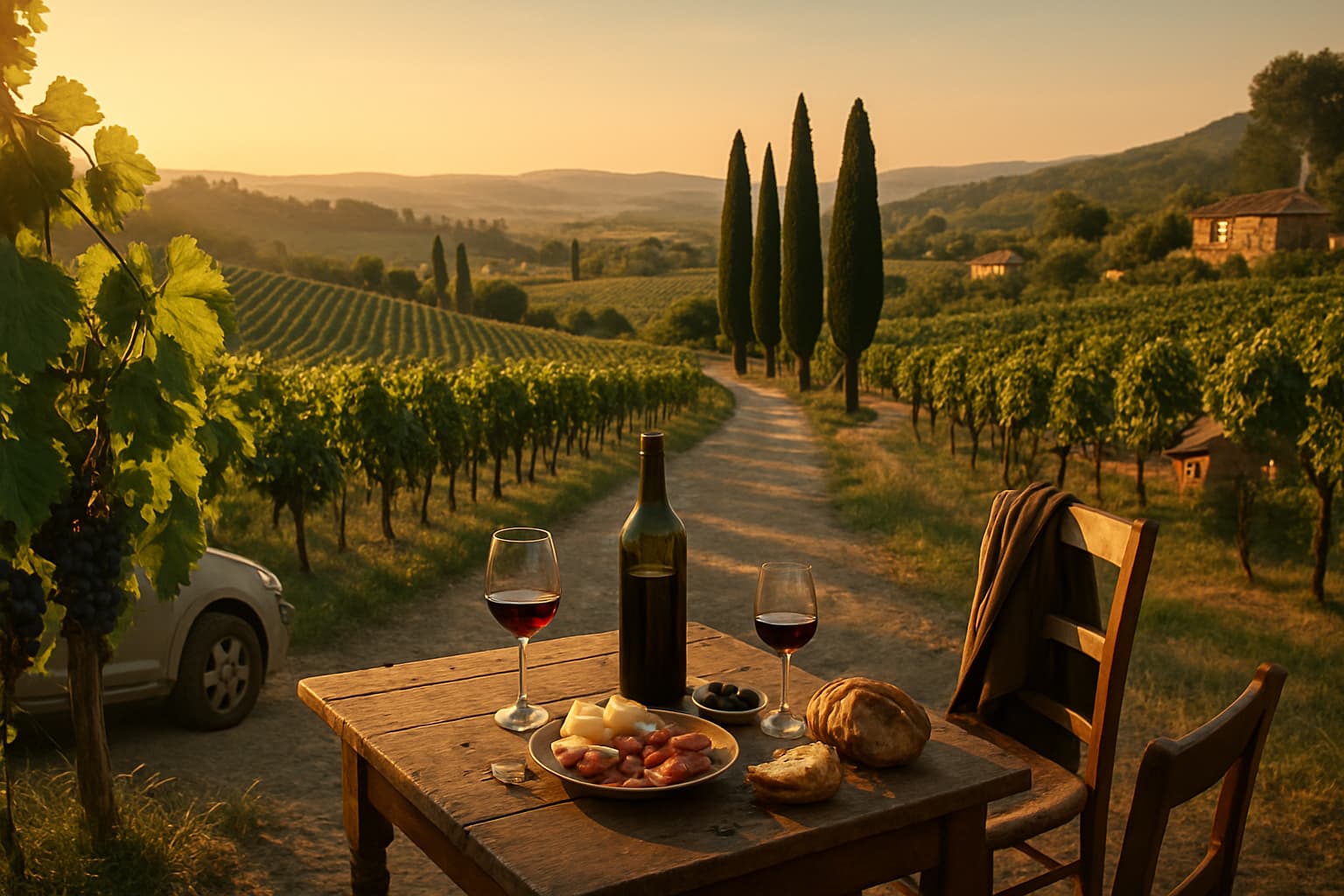
You stand in a vineyard at sunset, the soil under your boots, the smell of dust and wild herbs in the air, a glass of something red and alive in your hand. You look at the hills, the stone walls, the olive trees, the old farmhouse where someone is stirring a pot of something slow and garlicky.
For a moment, the tasting notes, the ratings, the collector nonsense—all of it falls away. What’s left is simple: people, land, time, and this fermented thing in your glass that somehow captures all three.
That’s wine tourism in Tuscany when you do it right. Not a box to tick, not a flex, but a brief, intoxicating glimpse into a world where wine isn’t an event. It’s just life—messy, beautiful, and, if you’re lucky, poured generously.
Tannins are astringent compounds found in wine that contribute to its texture and aging potential, often causing a drying or puckering sensation in the mouth. They are derived from grape skins, seeds, and stems, as well as from oak barrels used during aging.
/ˈtænɪnz/
Malic acid is a naturally occurring organic acid found in grapes that contributes to the tart, green apple-like flavor and crispness in wine. It plays a significant role in the taste and acidity of wine.
/mælɪk ˈæsɪd/
Filtration in winemaking is the process of removing solid particles from wine to clarify and stabilize it before bottling, using various types of filters to achieve different levels of clarity and remove unwanted elements like yeast, bacteria, and sediment.
/fɪlˈtreɪʃən/
Oxidation in wine is a chemical reaction between the wine and oxygen that can change its flavor, aroma, and color. This process can be beneficial or detrimental depending on the extent and context of the exposure.
/ˌɒksɪˈdeɪʃən/
Microclimate refers to the unique climate conditions of a small, specific area within a larger region, significantly influencing grapevine growth and the characteristics of the resulting wine.
/ˈmīkrōˌklīmit/
Get weekly wine recommendations, vineyard news, and exclusive content delivered to your inbox.