Wine Tourism
“Where every bottle tells a story”
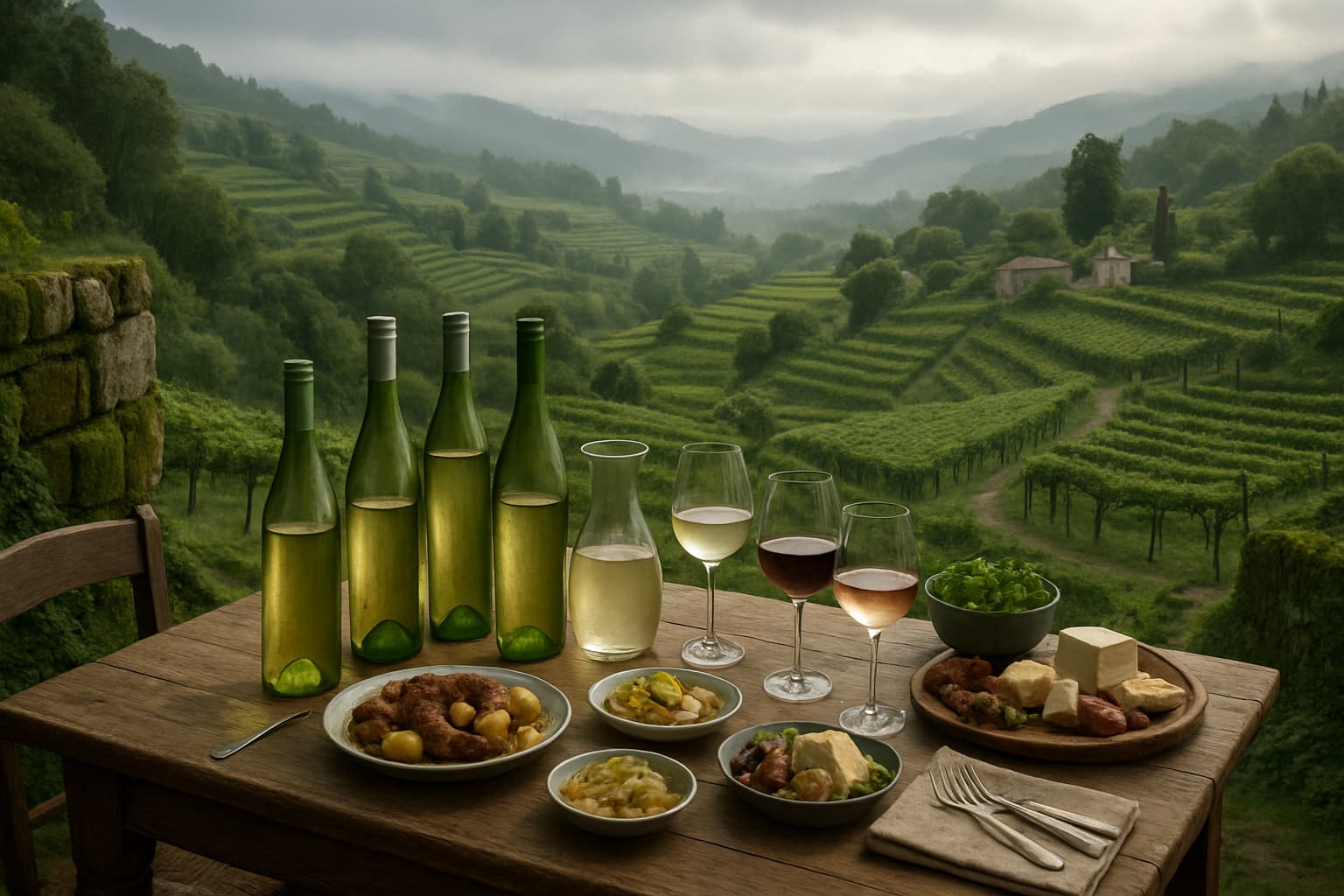
Oh, my dear, if you’ve ever dreamed of a place where the hills are green, the air is cool and fragrant, and the wine practically sings in your glass, then pack your curiosity and a good pair of walking shoes—we’re going to Vinho Verde and Minho!
This northern corner of Portugal is a wonderland for wine lovers who enjoy things fresh, lively, and just a bit spritzy. It’s not about heavy, brooding reds here; it’s about wines that dance on the tongue and landscapes that look as though they were painted in fifty shades of green. And the best part? You don’t have to be a sommelier or a snob—just hungry to taste, learn, and explore.
Let’s set the table and dive in, shall we?
Before you swirl and sip, it helps to know where you are.
Minho is Portugal’s lush, northernmost region, bordered by Spain to the north and the Atlantic to the west. Within it lies the Vinho Verde wine region, one of the country’s most famous appellations. “Vinho Verde” means “green wine,” but don’t be misled—it’s not the color that’s green; it’s the spirit. Think “young,” “fresh,” and “vibrant,” like a salad of crisp apples and citrus rather than a stew.
The region is cool and rainy by Portuguese standards, with misty mornings and plenty of Atlantic influence. This means:
If much of the wine world is about power and intensity, Vinho Verde is about lift and lightness. It’s the aperitif region of your dreams.
Now, my friend, let’s talk about what’s in the glass. You’ll find both whites and reds, but white Vinho Verde is the star of the show for most visitors.
When you raise a glass of white Vinho Verde to your nose, you’re likely to find:
These wines are:
They are simply marvelous with seafood, salads, light cheeses, and sunny afternoons.
Like any good recipe, the ingredients matter. Some of the key grape varieties you’ll encounter include:
Part of the joy of wine tourism here is discovering how each producer plays with these grapes, much like a cook adjusting salt, acid, and herbs to taste.
Don’t overlook the reds and rosés:
If you’re used to big, oak-laden wines, these can feel like a refreshing cold shower—shocking at first, then utterly delightful.
Vinho Verde isn’t one big homogeneous pot; it’s more like a set of little kitchens, each with its own specialties. There are nine official subregions, and while you don’t need to memorize them like a phone book, a few are especially important for wine travelers:
When planning your trip, look for wineries that highlight their subregion and key grape varieties. It’s like planning a tasting menu: you want variety, contrast, and a sense of progression.
Now, let’s roll up our sleeves and talk logistics. A delicious trip needs a bit of mise en place.
You’ll want a comfortable “home kitchen,” so to speak, from which to explore:
You can also stay at quintas (wine estates), many of which offer guest rooms, tastings, and sometimes even cooking experiences. It’s like living inside your favorite bottle for a few days.
Wine tourism in Vinho Verde and Minho is generally warm, welcoming, and delightfully unpretentious. You don’t need fancy vocabulary—just curiosity and respect.
You might find:
Always book ahead—even small family wineries are often happy to host, but they need notice to give you their full attention.
You simply cannot talk about wine tourism here without talking about the table. Minho’s cuisine is hearty, rustic, and full of character—just the sort of food that makes wine sing.
Look out for:
The rule of thumb: what grows together goes together. Local wines and local foods have evolved side by side, like old friends.
Even the most devoted wine lover needs a little break between sips. Fortunately, Minho is rich in diversions.
Between tastings, you can stroll, hike, or simply sit in a café and watch the world go by, glass in hand.
You may not be able to fit an entire vineyard into your suitcase, but you can certainly bring the experience back with you.
And when you open a bottle months later, you’ll find yourself transported back to those misty hills and mossy stone walls.
Wine tourism in Vinho Verde and Minho is not about ticking off famous labels or chasing points. It’s about discovery: fresh, lively wines; a landscape that looks like a painting; food that comforts and delights; and people who are genuinely pleased to share what they make.
You’ll taste whites that sparkle with acidity, Alvarinhos that show real depth, rustic reds that surprise you, and rosés that feel like summer in a glass. You’ll wander through vineyards, sit at long wooden tables, and perhaps find yourself lingering over one more glass than you planned—because it’s just that enjoyable.
If you’re looking for a wine region that is welcoming rather than intimidating, refreshing rather than overwhelming, and deliciously authentic from glass to plate, then this little green corner of Portugal is calling your name.
So, sharpen your appetite, polish your curiosity, and off you go—to sip, savor, and fall head over heels for the enchanting wines and warm hospitality of Vinho Verde and Minho. Bon voyage—and bon appétit!
Tannins are astringent compounds found in wine that contribute to its texture and aging potential, often causing a drying or puckering sensation in the mouth. They are derived from grape skins, seeds, and stems, as well as from oak barrels used during aging.
/ˈtænɪnz/
Malic acid is a naturally occurring organic acid found in grapes that contributes to the tart, green apple-like flavor and crispness in wine. It plays a significant role in the taste and acidity of wine.
/mælɪk ˈæsɪd/
Filtration in winemaking is the process of removing solid particles from wine to clarify and stabilize it before bottling, using various types of filters to achieve different levels of clarity and remove unwanted elements like yeast, bacteria, and sediment.
/fɪlˈtreɪʃən/
Oxidation in wine is a chemical reaction between the wine and oxygen that can change its flavor, aroma, and color. This process can be beneficial or detrimental depending on the extent and context of the exposure.
/ˌɒksɪˈdeɪʃən/
Microclimate refers to the unique climate conditions of a small, specific area within a larger region, significantly influencing grapevine growth and the characteristics of the resulting wine.
/ˈmīkrōˌklīmit/
Get weekly wine recommendations, vineyard news, and exclusive content delivered to your inbox.