Wine Tourism
“Where every bottle tells a story”
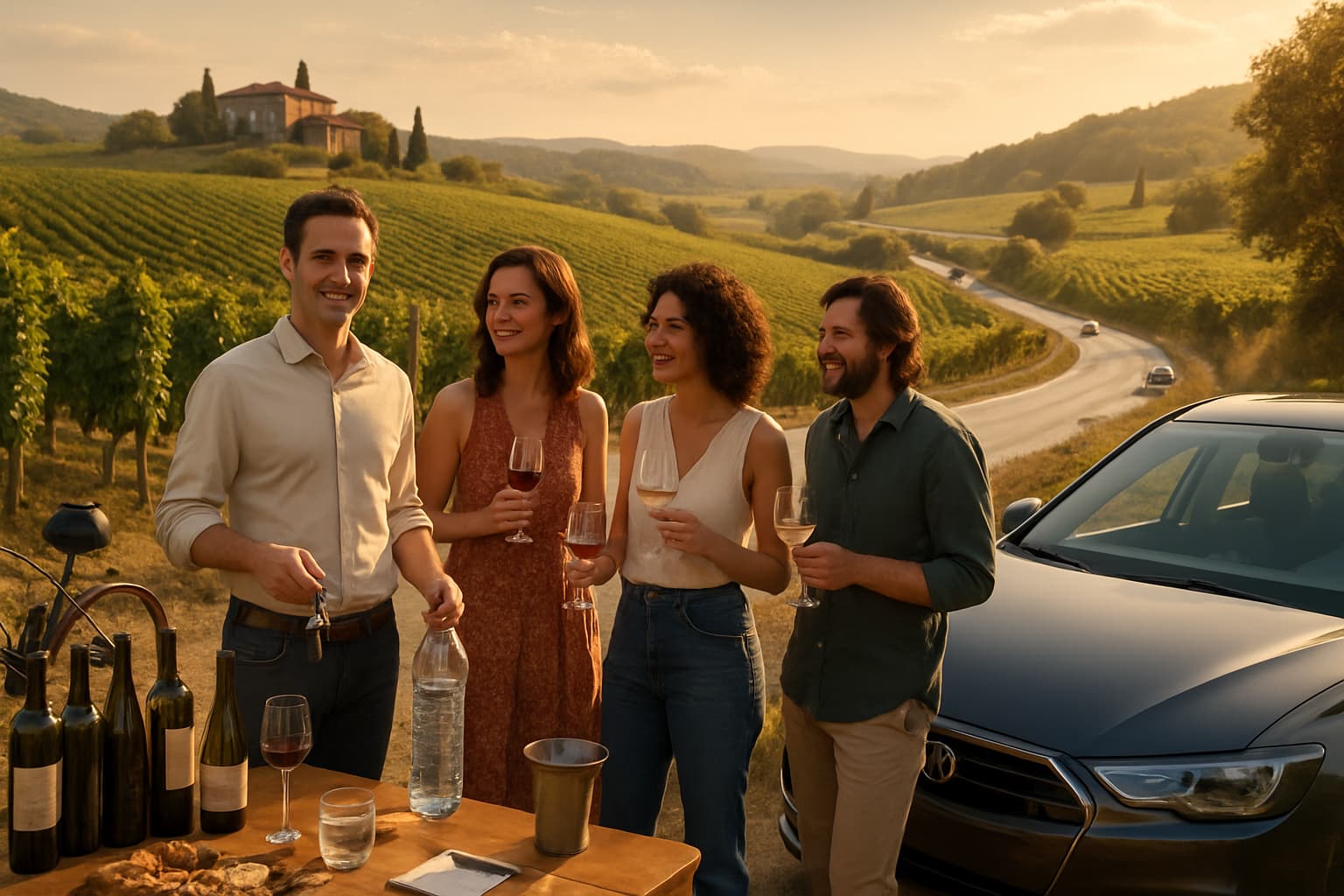
The first thing you need to understand is that wine tourism is a beautiful, seductive trap.
You don’t just “visit vineyards.” You march willingly into a sun-drenched hallucination where time melts, your inhibitions dissolve in oak barrels, and the line between tasting and drinking disappears like the last bottle at a bachelor party. If you’re not careful, you’ll wake up in a pensione with purple teeth, a bruised ego, and a vague memory of arguing with a sommelier about terroir at 3 a.m.
But it doesn’t have to be a descent into chaos. You can wander the vineyards, taste the good stuff, flirt with transcendence, and still get home with your dignity, your liver, and your driver’s license intact.
This is your field manual for surviving the wine trail without becoming a cautionary tale.
Wine regions are built to disarm you.
The light is softer. The hills roll like a promise. The people pour you alcohol at 11 in the morning and call it “education.” They speak in hushed tones about minerality and structure while quietly refilling your glass. There’s cheese. There’s charcuterie. There’s that one friend who keeps saying, “We’re on vacation, relax!”
It’s all a carefully curated illusion: luxury, ease, sophistication. But underneath it is a simple chemical fact—ethanol. The same substance in cheap vodka and bad decisions. Just because it came out of a Burgundy barrel instead of a plastic handle doesn’t mean it can’t wreck your life on a mountain road.
Responsible wine tourism isn’t about being puritanical; it’s about staying conscious. You’re not here to pound booze. You’re here to taste stories in liquid form—and remember them later.
Before we get into rules, you need to understand the battlefield: your own body.
A typical tasting pour is about 30–60 ml (1–2 oz). Five of those is roughly a full glass. Three wineries in a day with 5–6 pours each? You’ve had a bottle, at least. And that’s assuming you’re not “revisiting” your favorites or saying yes to barrel samples “for science.”
Wine is sneaky. It doesn’t slam you like shots; it creeps. You’re fine, you’re fine, you’re fine—and then you stand up.
Modern wines are often 13–15% ABV, sometimes higher. That “light, fruity” rosé can carry the same punch as a muscular red. A chilled white doesn’t care that it tastes like summer; it still metabolizes like booze.
Your body doesn’t care about romance, terroir, or tasting notes of blackberry and regret. It cares about how much ethanol you dumped into your bloodstream over time.
Wine tourism stretches the drinking window. You might start tasting at 10:30 a.m. and be sipping with dinner at 9 p.m. That’s not “a few glasses.” That’s an all-day marathon in disguise.
Hydration, food, and pacing aren’t optional in this game—they’re survival gear.
If you remember nothing else, remember this: do not drink and drive in wine country. Not “a little.” Not “just between tastings.” Not “I’m fine, I’ve had espresso.”
Wine tourism should be approached like a military operation: with planning, discipline, and snacks.
Three, maybe four wineries in a day is enough if you’re actually tasting, not just posing for photos.
You are not obligated to swallow every drop poured into your glass. This isn’t a pride contest; it’s a sensory exercise.
Wine critics, sommeliers, importers—they spit constantly. They are not lesser beings. They’re working. You are too, in your own deranged tourist way.
If anyone judges you, they’re amateurs. Or idiots. Or both.
Alcohol is a liar. It whispers, “You’re fine,” right up until you’re not.
For every tasting flight, drink at least one full glass of water. More if it’s hot or you’re at altitude.
Wine is not tequila. This isn’t about slamming. This is about nuance. Aroma. Texture. The weird joy of realizing this Pinot Noir smells like wet earth and crushed strawberries and some faint memory of your grandfather’s cigar box.
If you’re rushing through flights, you’re not tasting—you’re just drinking in smaller glasses.
You can be over the legal limit and still feel “okay.” Your reaction times are slower; your judgment is compromised; your confidence is inflated. Terrible combination.
No tasting is worth turning your vacation into a legal circus.
Wine regions are not amusement parks. They’re working agricultural areas, often with deep history and families who’ve been there for generations.
In many countries, public intoxication is illegal or at least deeply frowned upon. You’re not in a college town; you’re in someone’s home region.
Being obviously drunk in a tasting room is a fast way to get cut off, banned, or quietly blacklisted.
Wine tourism with friends can be glorious—or an unhinged fiasco.
One person in the group needs to:
Rotate this role each day so no one becomes the permanent babysitter.
Wine tourism is often framed as “once in a lifetime.” That’s how people justify turning their bodies into ethanol testing facilities.
But here’s the ugly truth: binge drinking, even in the name of culture, is still binge drinking.
The goal is sustainable hedonism, not a kamikaze mission.
If you’re going to dance this close to the edge, at least make it worth it.
Not some pretentious nonsense you’ll never read again. Just:
You’ll be amazed how quickly wines blur together after three stops and a long lunch.
Don’t buy every bottle that tastes good when you’re half-lit and charmed by the winemaker’s dog.
Despite your best intentions, sometimes the wheels start to wobble.
At that point:
If someone in your group is clearly over the edge, you’re done for the day. Get them back safely. No more “just one more glass.”
Wine tourism, done right, is a pilgrimage: a strange and beautiful journey into the landscapes, histories, and obsessions of the people who coax fermented grape juice into something transcendent.
Done wrong, it’s just another excuse to get drunk in prettier surroundings.
Responsible drinking on the wine trail isn’t about restraint for its own joyless sake. It’s about clarity. You want your memories sharp, not smeared. You want to remember the way that hillside looked at sunset, the way that old winemaker’s hands moved when he talked about his grandfather, the way that one bottle stunned you into silence.
You don’t get that by obliterating yourself. You get it by staying just this side of the abyss—tasting deeply, thinking clearly, and knowing when to put the glass down.
So go. Wander the vineyards. Chase the strange poetry in the glass. Just don’t confuse excess with experience.
The wine will always be there.
The question is: will you?
Tannins are astringent compounds found in wine that contribute to its texture and aging potential, often causing a drying or puckering sensation in the mouth. They are derived from grape skins, seeds, and stems, as well as from oak barrels used during aging.
/ˈtænɪnz/
Malic acid is a naturally occurring organic acid found in grapes that contributes to the tart, green apple-like flavor and crispness in wine. It plays a significant role in the taste and acidity of wine.
/mælɪk ˈæsɪd/
Designated Driver (DD)
Professional Drivers & Tours
Taxis & Ride-Sharing
Cycling: The Romantic Death Wish
Filtration in winemaking is the process of removing solid particles from wine to clarify and stabilize it before bottling, using various types of filters to achieve different levels of clarity and remove unwanted elements like yeast, bacteria, and sediment.
/fɪlˈtreɪʃən/
Oxidation in wine is a chemical reaction between the wine and oxygen that can change its flavor, aroma, and color. This process can be beneficial or detrimental depending on the extent and context of the exposure.
/ˌɒksɪˈdeɪʃən/
Microclimate refers to the unique climate conditions of a small, specific area within a larger region, significantly influencing grapevine growth and the characteristics of the resulting wine.
/ˈmīkrōˌklīmit/
Get weekly wine recommendations, vineyard news, and exclusive content delivered to your inbox.